Why Advocacy?
How this affects you – the diabetes educator.
The CB of the PA AADE is pursuing licensure. Patricia Stuart outlined the reasons below in her blog from July 31 2013.
Why are diabetes educators considering licensure?
By: Patricia Stuart, BS, MPH, MS, CDE on Jul 31, 2013
595 views as of Jun 23, 2015 10:47 PM
Why are diabetes educators considering licensure?
Patient safety - patients don't know what makes a credentialed diabetes educator and should be protected. Currently, ANYONE can call themselves a diabetes educator. Licensure will create practice standards that will require diabetes educators to stay current through continuing education, and practice evidence based, patient centered, outcome driven diabetes self-management education.
Provider safety - when a doctor or healthcare provider sends a patient for diabetes self-management education, he should know that a referral to the "diabetes educator" means that person knows what they are suppose to know to educate their patient. Only persons who are credentialed should call themselves a "diabetes educator".
Diabetes educator protection - a legal Scope of Practice that includes defined practice within the AADE7 (Healthy eating, Being active, Taking medication, Monitoring, Problem solving, Reducing risks and Healthy coping) will define the quality a diabetes educator brings. It will create a map of how to become a diabetes educator through the competencies associated with the AADE7 implementation. Only persons who are credentialed can call themselves a "diabetes educator".
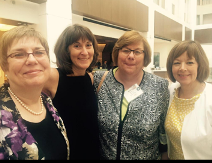
In June 2015, Diabetes Educators visited Legislators, in Washington, regarding licensure for Diabetes Educators. Left to right: Elizabeth Bryan (KY), Kellie Antinori-Lent (PA), Pat Adams (PA), Lisa Laird(PA).
Pennsylvania is required to submit a Sunrise Evaluation Report to the Department of State to consider the acceptance of licensure. How you can help:
- Submit anecdotal evidence to me of patient incidents that occurred from lack of proper diabetes education. There is no data base for this that I am aware of but correct me if I am mistaken.
- Submit successful patient education stories. In our recent trip to D.C for the Pubic Policy Forum., this is what health aides wanted to hear. They have all the statistical evidence they need to know diabetes needs to be addressed; they need evidence of the how it is addressed and the individual lives affected.
- Voice any concerns regarding licensure directly to the PA CB. We welcome your dialogue and wish to add the most clarity possible as we provide a unified mission to provide access to safe, accountable care with qualified educators.
- Get involved! Follow us on facebook (Pennsylvania Diabetes Educators) and twitter (@AADEinPA). Attend your local networking meetings (LNGs). Contact your local representatives to discuss the desperate need for diabetes care in our great state. Assure them you will be a valuable resource to them – you are the expert in diabetes and can offer a wealth of support.
- Share your passion for change. Diabetes is one of the most serious challenges to our health today. We will make a difference.
Respectfully submitted,
Lisa Laird
Chair, PA CB